

Scaling Early IDA Detection Through Smartphone-Based AI Screening
Danone’s latest research demonstrates that a combined Artificial Intelligence model can predict hemoglobin levels from smartphone images with clinically meaningful accuracy.
By combining digital health technologies with new communication and education tools, Danone aims to make iron deficiency more visible and easier to identify before it affects a child’s development and wellbeing. At the center of this effort is the development of the IronUp! Checker— a new AI-powered tool designed to support earlier awareness, screening, and action around iron deficiency. Traditional IDA diagnosis typically depends on invasive blood testing, which can be difficult and intimidating for infants and young children. Danone’s latest research explores a different approach: using artificial intelligence to estimate hemoglobin levels from smartphone images with clinically meaningful accuracy.
The technology works through a short- guided interaction in which children may be asked to stick out their tongue, smile, or show their teeth while visual health indicators are captured through a smartphone camera. Rather than feeling like a medical procedure, the experience is designed to be simple and engaging for children and intuitive for parents and healthcare professionals alike. The system then provides an early screening signal that can help guide awareness and encourage follow-up care where needed.
For Agathe Foussat, the Digital Health Director leading Danone's Digital Lab in Singapore, the ambition behind the technology is not innovation for its own sake but creating tools that can make hidden health issues more visible.
Her team focuses on developing technologies and services that help screen more people and support more targeted nutritional interventions. “One topic that many of us in this community are especially passionate about is Iron Deficiency Anemia,” she explains. “It very often goes unseen, yet it can have a significant impact on health in both children and adults. That’s why we decided to invest in technologies and services in this area — to ensure that we can screen more people and bring awareness to parents and children.” This focus on awareness sits at the heart of the IronUp! approach.
The IronUp! Checker offers parents a simple way to quickly assess children’s iron intake and better understand potential nutritional risks. As Agathe explains, “When you start checking, you start seeing.”
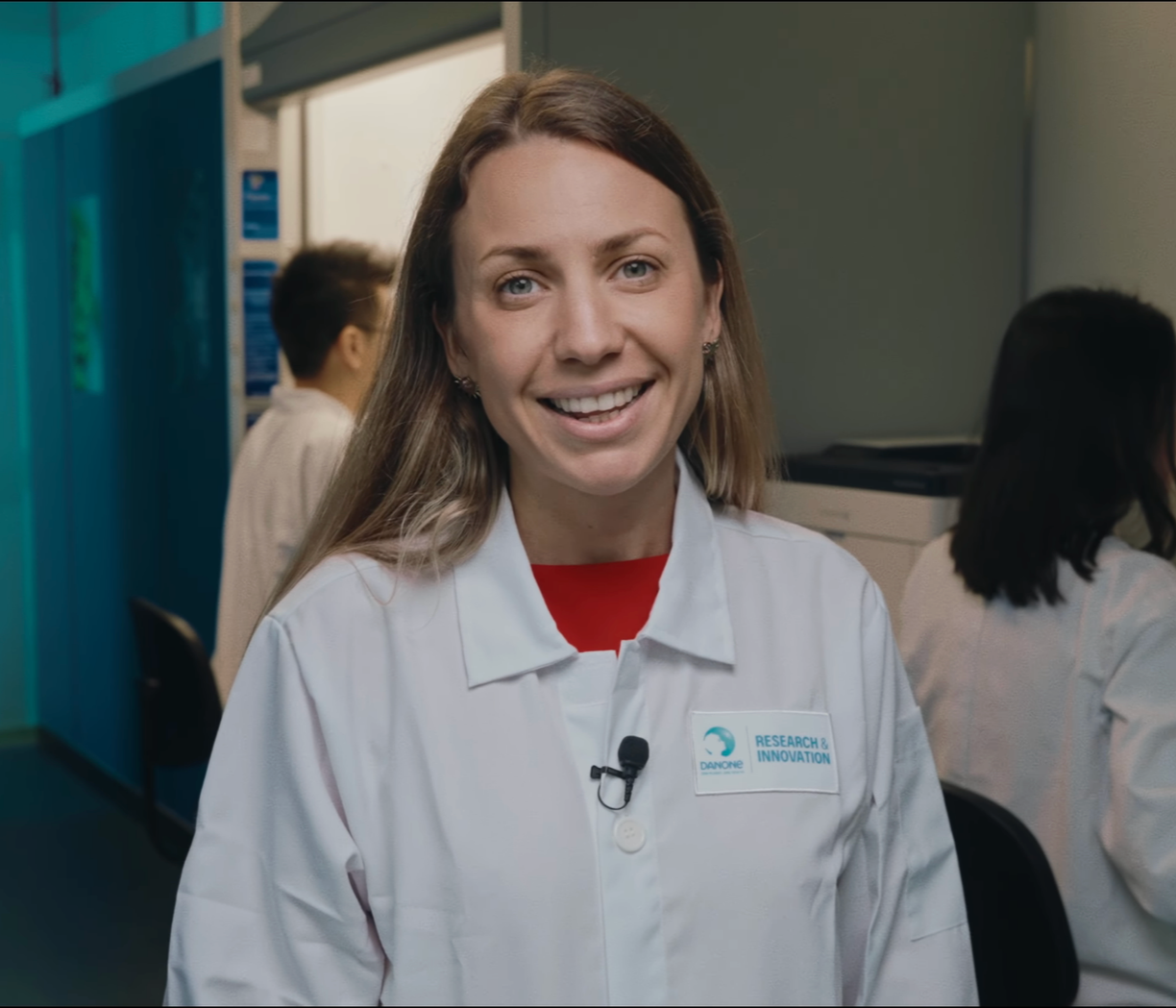
Agathe Foussat
Digital Health Director at Danone
Danone’s IronUp! Checker technology is supported by a global validation program known as FERROUS, a multiple clinical study roadmap designed to evaluate the tool across increasingly diverse settings and populations. FERROUS 1, conducted in Singapore in 2024 with 120 participants, confirmed the feasibility of smartphone-based hemoglobin prediction. FERROUS 2, conducted across Singapore and Thailand with 250 participants, demonstrated clinically meaningful accuracy under clinical conditions. FERROUS 3 in Côte d’Ivoire is intended to further validate performance in real-world healthcare environment and across more diverse population to increase robustness.
Alongside clinical validation, Danone has also conducted global user experience studies with healthcare professionals and caregivers to ensure the solution can integrate easily into both clinical and home settings. These studies helped refine the interaction so that screening feels accessible, intuitive, and supportive rather than clinical or intimidating. The broader ambition is not to replace healthcare professionals or diagnostic testing, but to strengthen the pathway to earlier detection and action. By turning hemoglobin screening into a scalable smartphone-enabled experience, Danone hopes to help close the gap between awareness and intervention for one of the world’s most widespread nutritional health challenges.
As Agathe reflects, iron deficiency is not limited to one geography or income setting — it exists everywhere. “Awareness and knowledge are absolutely key,” she says. “If we want to make this invisible condition visible, we need to ensure that no child’s health is limited by something we could have detected early.”