


Why this Moment Matters
Millions of children across the world are still suffering from Iron Deficiency Anemia. This condition is holding back their potential to live a full life. Now is the moment to come together to take action.
If we imagine the life of a child with IDA, every morning begins the same way…
Every morning begins the same way.
A kitchen light flicks on. A school bag is packed. A small body is coaxed out of bed.
For many families, these moments are so ordinary that they almost disappear.
Nothing feels wrong. Nothing feels urgent.
But underneath, Iron Deficiency Anemia is developing often quietly and without alarm - setting the stage for lifelong cognitive and physical impairment¹.
At home, the signs might be subtle enough to be dismissed as part of everyday life: a child who seems a little more tired than usual, a homework assignment that takes longer to finish, energy that fades too quickly.
At school, children will try to keep up: following along in class, running alongside friends at recess, often without realizing that anything feels different at all.
And in the clinic, healthcare providers face a challenge of their own. Symptoms like fatigue, low energy, and difficulty concentrating, if present at all, can point to many different conditions. Diagnosis typically relies on invasive blood tests that may be inaccessible and by the time results arrive, the condition is often already well established.
Responsibility is fragmented across families, schools, and healthcare systems. Children are being left behind. Now is the time to solve this.
Source: ¹UNICEF Regional Operational Guidance on Children Aged 6-59 Months, Anemia 2025; Indonesian Nutrition Association 2025
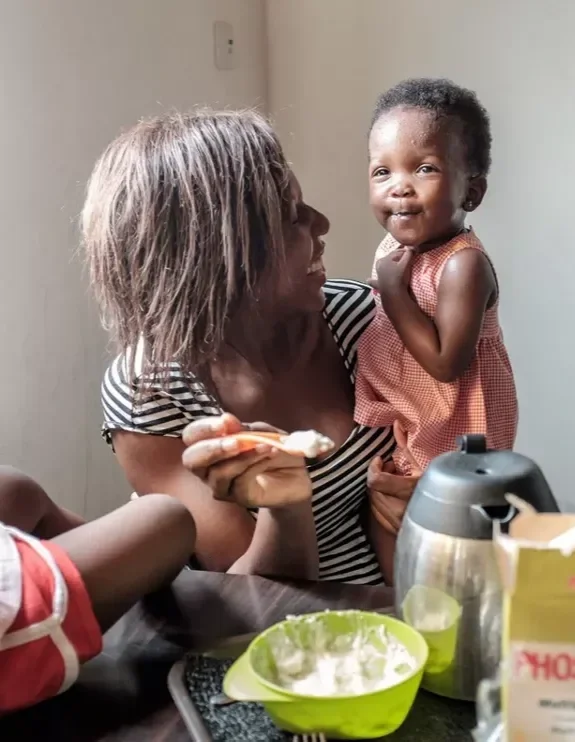
An overlooked health challenge
Anemia remains one of the world’s most widespread public health challenges, affecting an estimated 39.8% of children aged 6–59 months, 35.5% of pregnant women, and 30.7% of women aged 15–49 globally¹.
The burden is significant: nearly 2 billion people worldwide live with anemia, including 250-300 million of young children, making anemia one of the most common conditions in early life¹. The burden is not only widespread but also severe in many settings, with prevalence exceeding 50% in numerous countries and over 70% in the most affected regions, particularly in sub‑Saharan Africa and South Asia².
While anemia can have many causes including infections, inflammation, vitamin deficiencies, inherited blood disorders, or blood loss, iron deficiency is widely recognized as the leading contributor worldwide with an estimated 66% of the total anemia burden stemming from iron deficiency³.
This makes IDA a major focus for prevention through awareness, screening, and nutritional interventions.
However, this challenge begins much before anemia may become visible. Iron status can gradually decline when the body’s iron stores are no longer sufficient to meet its needs, affecting essential functions such as energy, immunity, growth, and cognitive development. As iron deficiency worsens and hemoglobin levels decline, it can develop into IDA. At this stage, the blood becomes less effective at carrying oxygen to tissues and organs, resulting in fatigue, weakness, reduced concentration, and diminished physical capacity. These effects can have lasting consequences, especially for young children and pregnant women.
*Source: ¹ World Health Organization Accelerating anaemia reduction, 2023; ² WHO The Global Health Observatory, 2021; ³ Innovative Hematology, Anemia and Iron Deficiency in Women: A Global and National Health Concern
Nearly
People Affected
1 in 4 people alive today live with anemia¹.
Source: ¹WHO 2019.
Just
Decrease in Prevalence
IDA prevalence has moved just 2% while stunting fell 19% and wasting fell 13% in the same time frame².
Source: ² World Health Statistics 2025, Global Burden of Disease Study 2019.
An Estimated
Lost in GDP Each Year
Annual global economic cost of anemia in children and women of reproductive age — productivity and earnings forgone³.
Source: ³ The cost of inaction: a global tool to inform nutrition policy and investment decisions on global nutrition targets (2024).
How can IDA present itself?
IDA often does not leave an outward mark. Its symptoms are the background noise of childhood, easily mistaken for something else, or nothing at all. In some cases, the symptoms are so slight that they go unnoticed. Some possible symptoms include:
Fatigue
A child who falls asleep at school, a mother who cannot finish her shift.
Pallor
A subtle change in lips, nail beds, and the inner eyelid — rarely noticed.
Weakened Focus
Difficulty concentrating and reduced attention.
Poor Appetite
A child who eats less, then has less iron, then eats less again.
Slow Development
Delayed motor skills and memory formation during the first 1,000 days.
Low Birth Weight
Iron-deficient mothers are more likely to deliver infants with lower birth weights.
Let’s hear from Anisa, a mother from Indonesia whose son was diagnosed with IDA
Anisa sensed that something wasn’t quite right with her little boy. His nails broke easily, and although he ate well, he never seemed to gain weight. She never imagined the cause could be Iron Deficiency Anemia.
After speaking with a doctor and screening him for iron deficiency, Anisa began incorporating iron-rich foods and Vitamin C into his diet. Today, Anisa knows how to provide nutritious meals for her son to support his healthy growth and development.
Watch Anisa’s inspiring story here.

What are the Consequences of IDA?
Early childhood is a critical period for growth, learning, immunity, and long-term development. From conception to childhood, iron plays an essential role in supporting the body and brain as they develop rapidly — from physical growth and immune function to cognitive development, motor skills, memory, and attention. When children do not get enough iron, the effects can be wide-ranging.
Conception
Prenatal
0–6 Months
Newborn
6–24 Months
Complementary Feeding
2–5 Years
Early Childhood
Adulthood
Long-term Impact
Hover over a stage to learn more
Conception
Prenatal
For pregnant women, IDA affects both mother and child. It increases the risk of preterm birth, low birth weight, miscarriage, and higher maternal and infant morbidity and mortality.
0–6 Months
Newborn
Rapid brain growth in early life depends on iron stores from pregnancy to support rapid brain development, red blood cell production, immunity, and physical growth. Infants born with low iron begin life at a developmental disadvantage.
6–24 Months
Complementary Feeding
During the complementary feeding window, iron intake is often inadequate. This is a critical period supporting rapid growth and brain development. Dietary iron should supplement breast milk but frequently falls short.
2–5 Years
Early Childhood
Iron remains essential to support toddlers' brain function, energy levels, and continued growth. Untreated iron deficiency can lead to lasting cognitive and motor deficits — delayed motor development, impaired memory, reduced attention, and lower performance on standardised cognitive tests.
Adulthood
Long-term Impact
Childhood anaemia has lasting impacts on productivity and earnings. A 2024 study in Health Policy and Planning estimates it costs the global economy $161 billion annually in lost productivity and future income.
There are five core reasons why progress towards combatting IDA has stalled.
-
Many with IDA do not show any outward mark and do not create a visible health emergency. Consequences take time to develop and take effect, thus making them challenging to link back to IDA.
-
Screening is invasive, not routine, and expensive. Whether you are a parent or an HCP, a blood test is an uncomfortable recommendation for a child and most health systems do not have formal protocols to include iron screening. In addition, screening is expensive, time consuming, and not always accessible to a majority of the population.
-
Until 2024, definitive country-level data on the economic cost of anemia did not exist, leaving its true scale and threat largely abstract. As a result, anemia, and especially IDA, has too often remained under-prioritized on the public health agenda, despite its consequences for children’s development, productivity, and long-term growth. Without clearer evidence, it was harder for health systems to prioritize prevention, screening, and early intervention at scale.
-
IDA often falls through institutional gaps because it sits across multiple sectors including nutrition, maternal health, pediatrics, and infectious disease without a single clear owner. Public health systems are typically organized around siloed programs with dedicated funding and metrics, while IDA is a diffuse, multi-cause condition that doesn’t fit neatly into any one of them. As a result, it receives fragmented attention and lacks coordinated, sustained action at scale.
-
Diet, infection, inflammation, absorption, and poverty all contribute to IDA, and no single intervention can address it. The causes also vary by region.

Building a Preventive Approach to IDA in Malaysia
Professor Dr. Muhammad Yazid bin Jalaludin’s work is a leading example of how healthcare professionals are working to advance early detection and prevention of IDA.
-
Prof. Dr. Muhammad Yazid bin Jalaludin has played a leading role in advancing early detection and prevention of IDA in Malaysia. Through the Iron Strong study, he and his team screened around 1,200 children and found that nearly one in three was at risk of IDA—helping bring visibility to a major but often overlooked public health issue.
His work demonstrated that early screening can be simple, scalable, and non-invasive through the use of needle-free hemoglobin testing and digital iron-intake screening tools. Beyond detection, he has championed clear clinical pathways, early intervention, and better nutrition practices to support children’s long-term growth and cognitive development.
Building on this foundation, Prof. Dr. Muhammad Yazid bin Jalaludin led the SEA IDA Advisory Board in developing 2025 regional recommendations for routine early screening, while also contributing to Malaysia’s Ministry of Health Clinical Practice Guideline on iron deficiency. Through collaboration with policymakers, healthcare providers, and Danone, he has helped drive a more proactive, prevention-focused approach to childhood IDA—transforming awareness into coordinated action that supports healthier starts for children across the region.

Building Momentum for Impact
Through IronUp!, new advances in nutrition, screening, health technology, and cross-sector collaboration are helping to prevent iron deficiency anemia earlier than ever before — accelerating progress toward a future where every child can grow up iron strong.