
Lucky Iron Life
In Cambodia in 2012, a Canadian graduate student named Christopher Charles had a simple idea: what if people could add iron to their food by cooking with it?
In Cambodia, where rice is the dietary staple and iron-rich foods can be difficult or expensive for many families to access, a Canadian graduate student named Christopher Charles had a simple, innovative idea: what if people could add iron to their food by cooking with it?
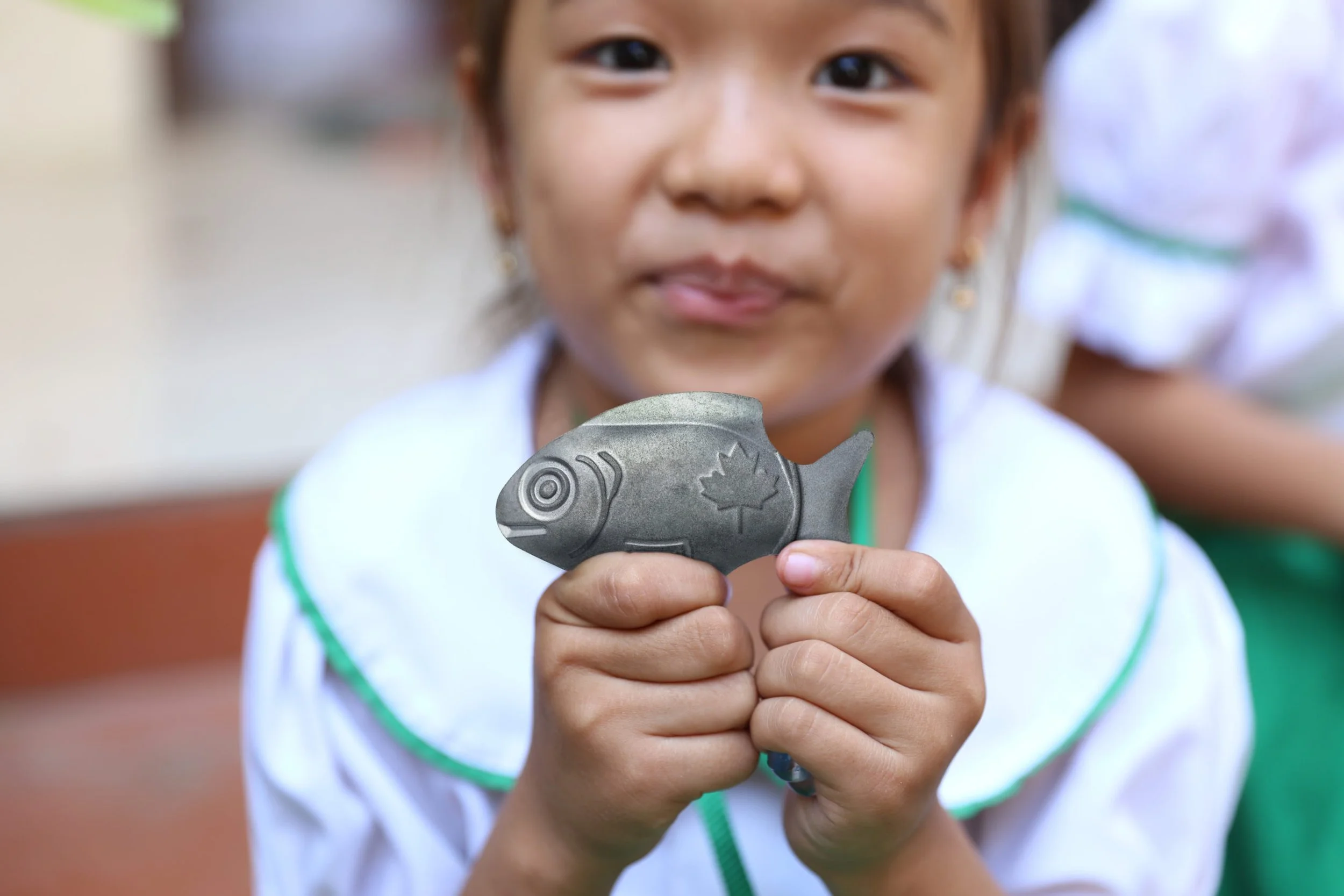
In 2012, he designed the Lucky Iron Fish — a small, fish-shaped ingot made of food-safe iron that is placed in boiling water or soup during cooking to help increase iron intake. The fish shape was intentional: in Cambodian culture, the fish is associated with luck and prosperity, helping the solution feel familiar and culturally meaningful from the outset.
This approach was later adapted in India, where the ingot was redesigned in the form of a leaf to better resonate with local cultural and dietary habits. The leaf shape — more familiar and aligned with a predominantly plant-based context — helped encourage consistent usage, reinforcing the importance of culturally grounded design in driving real impact.
This innovation is supported by a social enterprise model that combines commercial reach with social impact: sold online to consumers — including women, vegans, and other at-risk groups — the product generates revenues that help subsidize access in underserved communities. Through partnerships with NGOs and public health programs, this cross-subsidization approach enables low-cost or free distribution, ensuring that impact can be sustained and scaled.
Today, Lucky Iron Life is present in several regions where IronUp! operates and is connected to Danone through Danone Communities, reflecting a shared commitment to improving access to nutrition solutions for underserved communities. The initiative is particularly relevant because it offers a simple, low-cost way to support iron intake using everyday cooking practices, helping make iron-rich nutrition more accessible in settings where dietary diversity may be limited.
Lucky Iron Life Life also supported IronUp!’s activities around International IDA Day in November 2025, helping to amplify awareness, screenings, and community engagement efforts across priority markets. These activities formed part of a broader global mobilisation that included an Iron Deficiency Anemia pledge campaign engaging more than 20,000 healthcare professionals in India, the IronBiotics Summit in India, IdeaFest in Indonesia — a cultural festival and talk series focused on iron deficiency awareness — conferences across the Middle East and North Africa, and a new public-private partnership in Madagascar between the Ministry of Public Health, Blédina, SOMAPED, and OPHAM to launch an Early Childhood Anemia Screening Project.
The Lucky Iron Life story highlights an important dimension of the broader IDA response: a crucial aspect to addressing iron deficiency is about creating accessible, culturally relevant, and affordable pathways to better nutrition. Its success demonstrates how locally resonant, human-centred approaches can complement screening and awareness efforts by helping families integrate iron support into everyday life.
More recently, the initiative has expanded further with the introduction of a powdered iron solution designed to fortify meals at scale. By integrating into school meal programs, government initiatives, canteens, and other large-scale food providers, this new format enables the impact to expand from hundreds of thousands to potentially millions of people.
As IronUp! continues expanding prevention and screening initiatives across Southeast Asia, Africa, and beyond, examples like Lucky Iron Life illustrate the value of combining innovation, affordability, cultural understanding, and community engagement to help close gaps in iron deficiency awareness and care.