
The System-Changing, Multi-Sectoral Approach to IDA in India
20,000+ Healthcare professionals, one shared commitment to address IDA in India!
Iron Deficiency Anemia (IDA) has been a public-health concern in India for more than 50 years. Despite decades of government-led supplementation programs and awareness efforts, progress has remained uneven, with one in ten Indian children still not consuming iron-rich foods.
Two years ago, Danone India set out to tackle the issue differently. Rather than launching another standalone product, the team aimed to address the full IDA journey from awareness to early screening, nutritional solutions, and systemic change. Their ambition was to become a “nutrition partner” within the existing healthcare ecosystem.
To do this, Danone partnered with two state governments (UP and BIHAR) on impact projects spanning screening, monitoring, and impact analysis. At the same time, the team expanded consumer awareness campaigns, co-produced a state-government-backed film on IDA, organized a large-scale healthcare professional awareness initiative, and published a white paper alongside industry body Federation of Indian Chambers of Commerce & Industry. In parallel, Danone continued product renovation efforts and strengthened in-clinic screening using non-invasive Hb devices and the iron intake questionnaire.
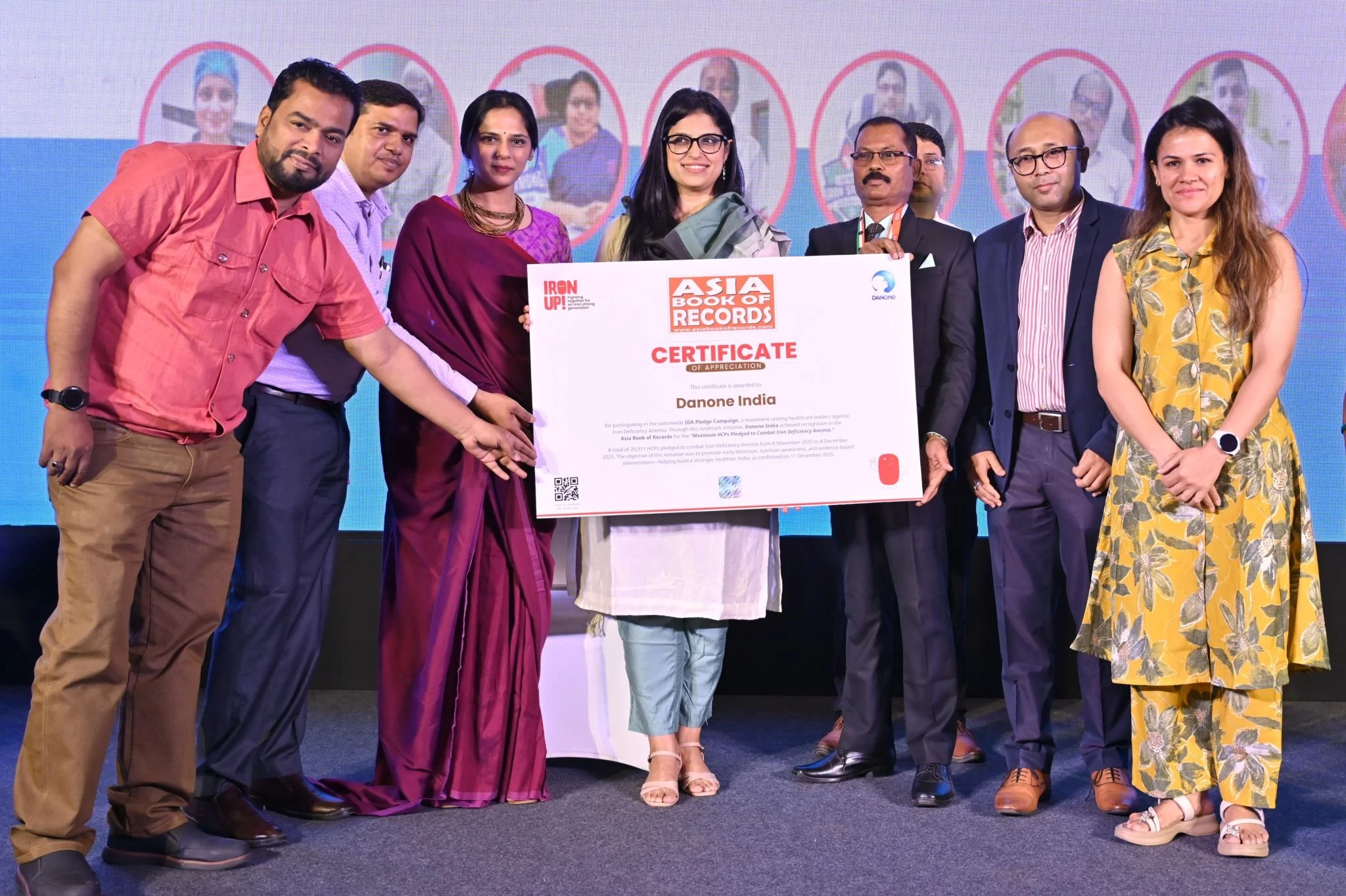
A major turning point came around IDA Day on November 26th, which the team transformed into a rallying moment for the broader healthcare community. Doctors, nurses, chemists, pharmacists, retailers, and midwives were invited to take an “IDA pledge,” committing to greater identification and awareness of IDA. The campaign generated more than 20,0000 healthcare professional pledges - enough to secure an Asia Book of Records recognition for IDA awareness efforts. The recognition was later amplified across regional media by one of the partner states.
Today, the initiative is approaching roughly 50% of its committed screening KPI, with Danone’s AI-powered screening tool called IronUp! Checker expected by Fall 2026 aimed at further scaling early identification and intervention.