
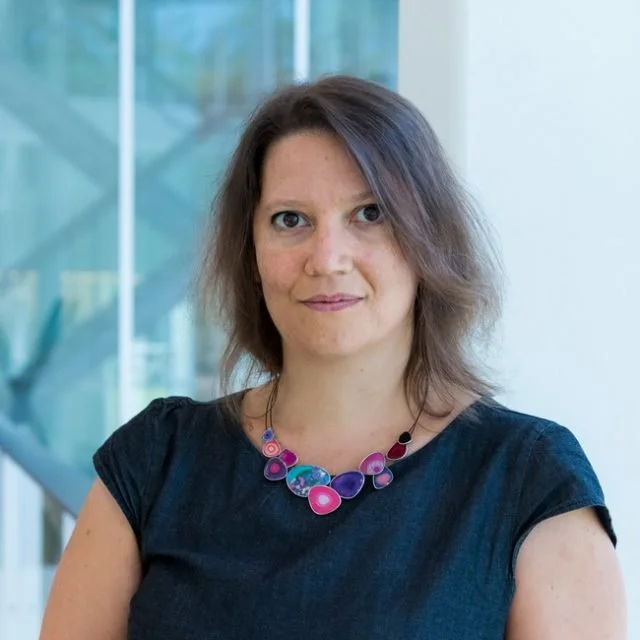
Dr. Marion Jourdan
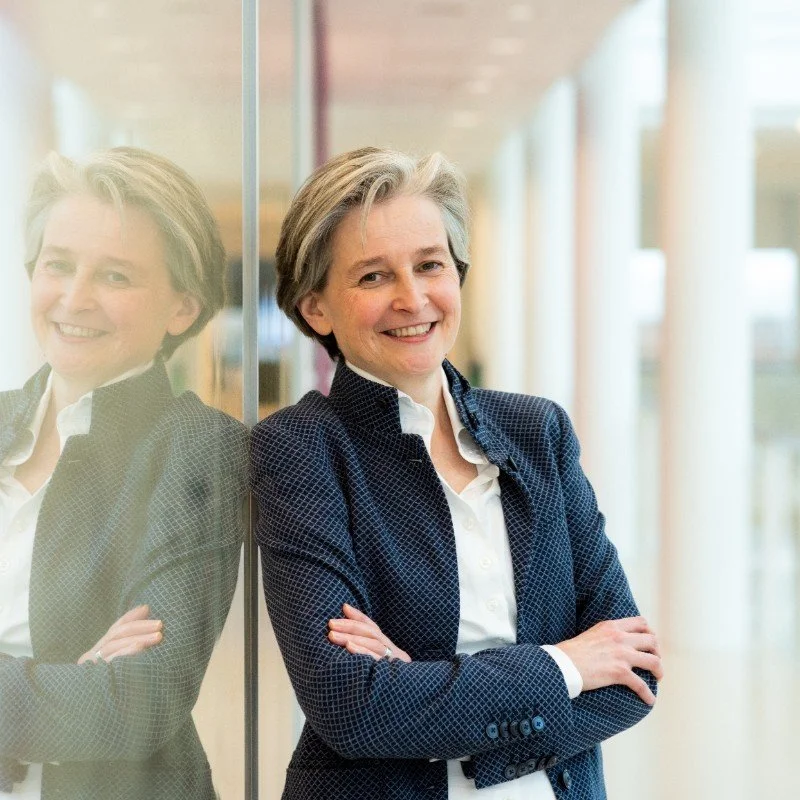
Dr. Ingrid Renes
Meet the Two Women Behind IronBiotics
Meet the two women leading the vision and the science behind IronBiotics, Danone’s in vitro iron bioavailability enhancement that supports a favorable infant gut microbiome.
Four years ago, Dr. Marion Jourdan had never thought much about iron. As Medical Affairs Lead for Danone’s Africa, Middle East and Asia (AMEA) zone, she was just beginning to understand the scale of Iron Deficiency Anemia (IDA) across the regions she supported. From West Africa to India and Southeast Asia, millions of children were growing up without enough iron, a deficiency that can impair cognitive development, weaken immunity, and limit healthy growth.
For Dr. Jourdan, the issue quickly became impossible to ignore. “If things are not done fast and well,” she says, “children are probably moving away from what could have been their optimal growth path.” Addressing iron deficiency was not only about nutrition; it was about protecting a child’s ability to learn, grow, and reach their full potential. As Danone increasingly recognized IDA as a major global health challenge, Dr. Jourdan helped unite previously disconnected initiatives into a shared strategy. Working alongside colleagues across commercial, partnerships, and research teams, she helped shape what would become IronUp! — Danone’s platform for preventing iron deficiency around the world. The ambition was bigger than building brands. “We had that heart from the beginning,” she explains, “to look at it as more than a tactic, but really as a commitment.” But ambition alone would not solve the problem. Iron is notoriously difficult for the body to absorb, and unabsorbed iron can disrupt the gut microbiome and feed harmful pathogens. Danone already had a proven prebiotic solution that supported iron absorption, but it was too expensive for many of the communities most affected by IDA. The challenge became clear: create an affordable alternative that could deliver similar benefits at scale.
That challenge would eventually lead Dr. Jourdan to Dr. Ingrid Renes. For Dr. Renes, Director Gut Health at the Danone Global Research & Innovation Center and a scientist trained in gastroenterology and nutrition research, the work aligned perfectly with the question that had guided her entire career: how do you give children a better start in life? After completing a PhD in gastroenterology and nutrition and leading a neonatology research group focused on preterm infants, she had built deep expertise in gut health and nutrition science. When Dr. Jourdan approached her with the idea for a new iron-focused initiative, Dr. Renes immediately saw its potential. Together, they developed a proposal to investigate whether affordable combinations of prebiotic fibers could improve iron absorption. With support from leadership and highly motivated research teams, IronBiotics was born.
Dr. Renes and her colleagues began exploring combinations of ingredients such as inulin and long-chain fructo-oligosaccharides, alongside Vitamin C and various iron sources, to help the body absorb iron more effectively. Their work soon led to a breakthrough. Beyond confirming improved absorption in the small and large intestines, the team discovered that specific short-chain fatty acids produced during fermentation in the colon played a critical role in the absorption process — challenging long-held assumptions about how iron absorption worked. According to Dr. Jourdan, the team’s original hypothesis was validated in preclinical experiments, within roughly two years, IronBiotics progressed from early laboratory research to preparation for market introduction in a field where nutrition innovations can take a decade to reach consumers. The IronBiotics patent was filed in October 2024 and published in April 2025.
Both women emphasize that the project’s success was driven not only by science, but also by trust and collaboration. Dr. Renes credits a culture where teams challenged one another, a leadership group that empowered researchers, and colleagues across markets who worked together toward a common goal. Dr. Jourdan is equally quick to recognize the broader network behind the work, from scientists to country teams that translated the innovation into products and programs that could reach families directly.
Today, IronUp! has reached millions of screenings and partnered with governments to facilitate the integration of simple iron-risk questionnaires into child health systems. For Dr. Renes, the work is only beginning. She is already exploring how biotic science could improve gut health for undernourished populations and vulnerable patients more broadly. “If I would not believe that we could improve it and make a difference,” she says, “then I would retire. I am very proud of what we have achieved, but the story does not end here!”
For Dr. Jourdan, the achievement is deeply personal. “It’s a big pride of what we have achieved,” she reflects. Together, the two women combined vision and science to transform a quiet but widespread health challenge into a movement helping to bring millions of children closer to a healthier future.
If you’d like to read more about the science behind IronBiotics, read the story here.