
How IronUp! Is Growing IDA Awareness by Scaling Screenings
IronUp! is making IDA visible so more children and families can access prevention, nutrition, and support before long-term impacts begin.

IronUp! was built around a simple but urgent challenge: Iron Deficiency Anemia (IDA) cannot be prevented at scale if it remains invisible. Too often, children are only identified after symptoms have already begun to affect their growth, learning, immunity, and development. Standard screening pathways typically rely on blood draws, clinic visits, and laboratory infrastructure, creating barriers that can delay detection and limit access, particularly in low-resource settings.
Danone’s ambition through IronUp! is to shift IDA from a hidden condition to one that can be recognized, discussed, and addressed earlier in childhood. At the heart of this approach is the belief that prevention begins with awareness and early detection. Screening is therefore one of the program’s most important tools for prevention. It acts as a gateway to understanding a child’s nutritional status, helping caregivers and healthcare professionals identify risk earlier and take action before iron deficiency begins to compromise healthy development. Importantly, screening also serves as a powerful awareness tool. It helps families better understand the causes and consequences of IDA, raises visibility around the importance of iron-rich diets, and creates opportunities for conversations about nutrition, fortification, and early childhood health. Across IronUp!, screening is designed not only to identify children at risk, but to connect families with practical guidance and prevention support. Children identified as ‘at risk’ can then be referred toward nutritional counselling, dietary recommendations, follow-up monitoring, and appropriate iron-rich nutritional solutions.
IronUp! is the first global program of its kind dedicated to accelerating efforts against IDA in children, building on decades of Danone expertise in early life nutrition. Focused on regions where IDA prevalence remains high, including Southeast Asia, the Middle East, and Africa, the program combines awareness, screening, partnerships, and nutrition solutions into a systemic prevention model designed to reach children during the most critical years of development. To expand access to screening at scale, IronUp! has developed a portfolio of complementary innovations that bring detection beyond traditional healthcare settings and closer to families and communities.
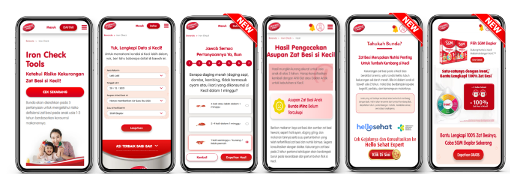
The first is the Iron Intake Questionnaire (IronQ), a simple seven-question dietary risk assessment for children aged six months to six years. Based on iron-rich food intake and nutritional risk factors, the screener helps parents and healthcare professionals identify children who may be at risk of iron deficiency before more serious symptoms appear. Because it can be deployed digitally or in person, the tool can be integrated across websites, mobile apps, telehealth platforms, clinics, schools, community health days, and national child health booklets, significantly expanding the reach of prevention and awareness efforts beyond conventional clinical infrastructure. The digital experience is also designed as an education platform in itself. When delivered through websites or mobile channels, the screening pathway can immediately provide caregivers with information about IDA, guidance on iron-rich diets, nutritional recommendations, and next-step actions based on a child’s screening outcome. In this way, screening becomes both an assessment tool and a scalable communication channel capable of delivering nutrition education directly to families.
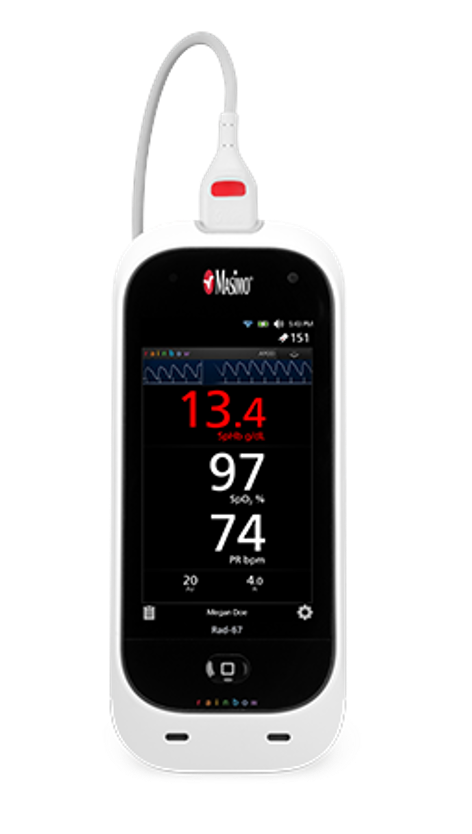
The second pathway uses non-invasive Hb devices to support painless anemia-risk screening without requiring a blood draw. By enabling rapid hemoglobin assessment in both clinical and community settings, the device helps healthcare workers deliver practical screening in environments where traditional laboratory testing may be difficult to access. This creates opportunities to integrate screening into routine childcare and community health programs at much larger scale.
IronUp! is also advancing the next generation of digital screening innovation through Danone’s proprietary AI-powered IronUp! Checker, currently beginning rollout in Indian markets in late 2026. Using smartphone-based image analysis and machine learning technology, the platform is being developed to estimate hemoglobin levels through a simple digital interface accessible to both parents and healthcare professionals. Current work includes prototype and model validation, UX testing, patent filings, and further studies to strengthen performance across diverse populations. By combining clinical research with scalable digital delivery, the ambition is to create near-zero marginal-cost screening capable of dramatically expanding future access to early detection.
Together, these tools create a layered prevention ecosystem that combines dietary risk assessment, non-invasive hemoglobin measurement, and AI-enabled digital screening to support earlier action across both health systems and communities. Healthcare professionals participating in IronUp! initiatives receive training on IDA prevention, and nutritional prevention of IDA including education about iron-rich foods and iron-fortified products. Healthcare professionals can in this way offer follow-up care and prevention support after IDA screening. Alongside screening expansion, Danone is also working to improve access to evidence-based nutritional solutions tailored to the iron needs of young children. These include formulations designed to enhance iron absorption through ingredients such as Vitamin C and prebiotics. Formula milks containing IronBiotics, Danone’s patent-filed innovation, are now available in multiple markets. By linking awareness, screening, nutrition education, and nutritional intervention together, IronUp! aims to create a more complete prevention pathway.
This integrated model has enabled rapid scale-up. Through partnerships with governments, NGOs, healthcare providers, and medical societies, IronUp! has already supported millions of screenings across Asia, the Middle East, and Africa while helping integrate IDA prevention into broader national child health strategies. Growth has been driven by the expansion of scalable digital screening tools, partnerships that embed screening into public health systems, and mobilization of healthcare networks capable of reaching families directly within communities. As IronUp! continues to expand across high-burden regions, Danone is positioning screening not as a healthcare intervention, but as foundational prevention infrastructure. By combining innovation in digital health, non-invasive screening, scientific nutrition, and systemic partnerships, the program aims to make healthy development more accessible during early childhood when timely nutrition interventions can have lifelong impacts on human capital, resilience, and well-being.